
Inside a job
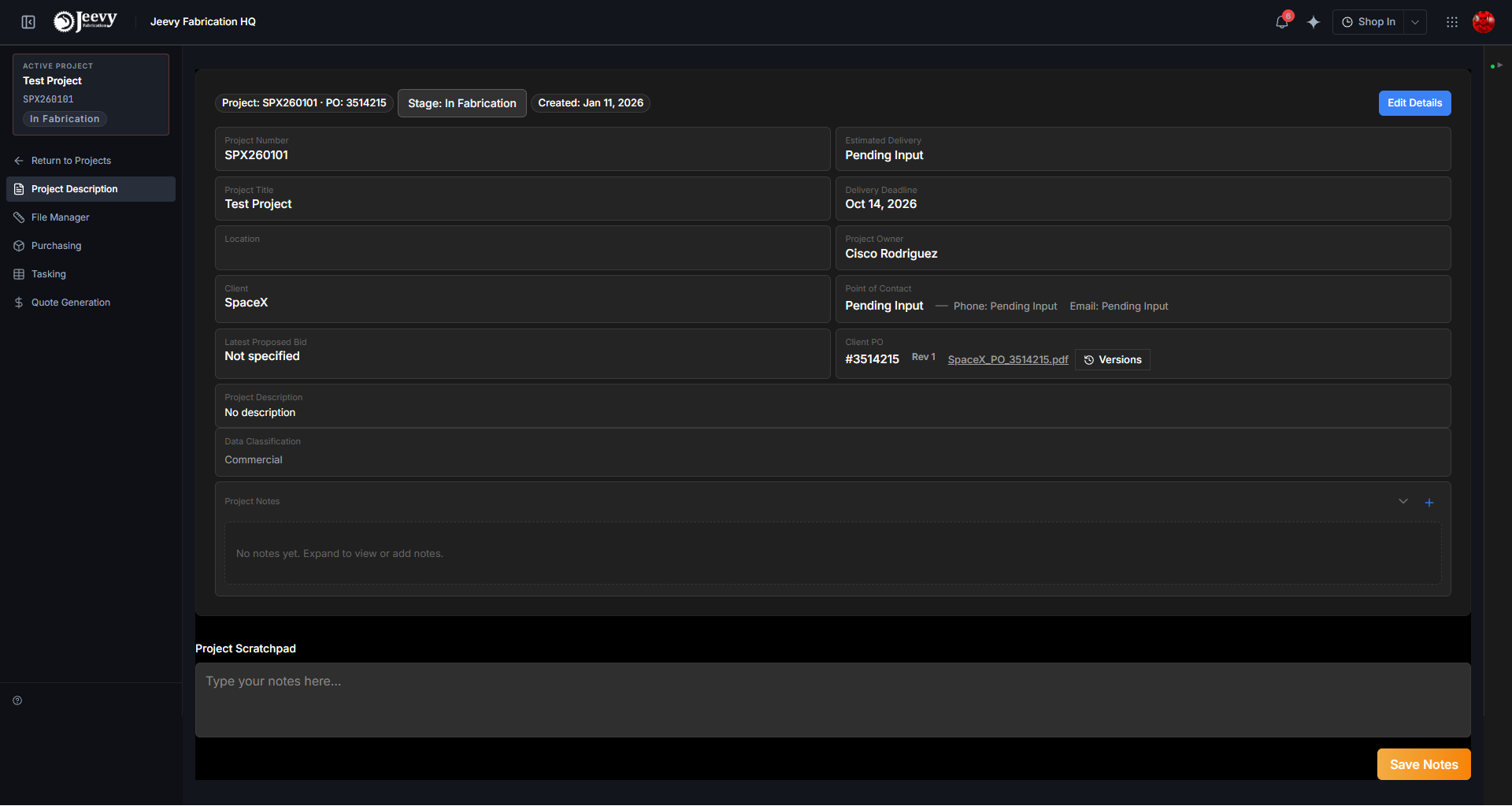
The job header: client, PO, stage and notes. Everything else about the job hangs off the sidebar beside it.
For EveryoneUpdated
Opening a job lands you on its header: who it is for, the PO behind it, what stage it is at, and the running note thread. Everything else about the job is a section in the sidebar.
One place each
The sidebar is the whole job, split by what you are trying to do:
| Section | What is in it |
|---|---|
| File Manager | Drawings, specs, vendor documents |
| Purchasing | What the job is made of, and the orders for it |
| Tasking | When the work happens and who does it |
| Communications | Email attached to this job |
| Expenses | What has been spent against it |
| Quote generation | The bid document, on a quote |
Same job, one place each. Nothing lives in two sections.
The header is the summary
Client, PO number and stage are the facts everyone else's work keys off.
Notes are the job's thread
The note thread here is the same one the dashboard writes into. Anything logged from a dashboard row appears here, and the other way round.
Type @ to mention somebody, and images can go with a note.
More in Overview
Your first 30 minutesSigning up asks for one thing: your shop name. Everything else is a checklist on your dashboard, and this walks one job from quote to the shop floor.
Quotes and projectsEverything the shop is working on. A quote is a job you are pricing; accepting it turns it into a project and carries everything across.
Email on a jobEmail threads attached to this job, including anything the intake agent routed here on its own.
Your accountYour profile, your language, how Jeevy reaches you, and what the assistant should remember about you. Everything here is about you, not the shop.
Job costWhat the job actually cost: material bought against it, plus out-of-pocket expenses with receipts. Actuals, not the estimate.